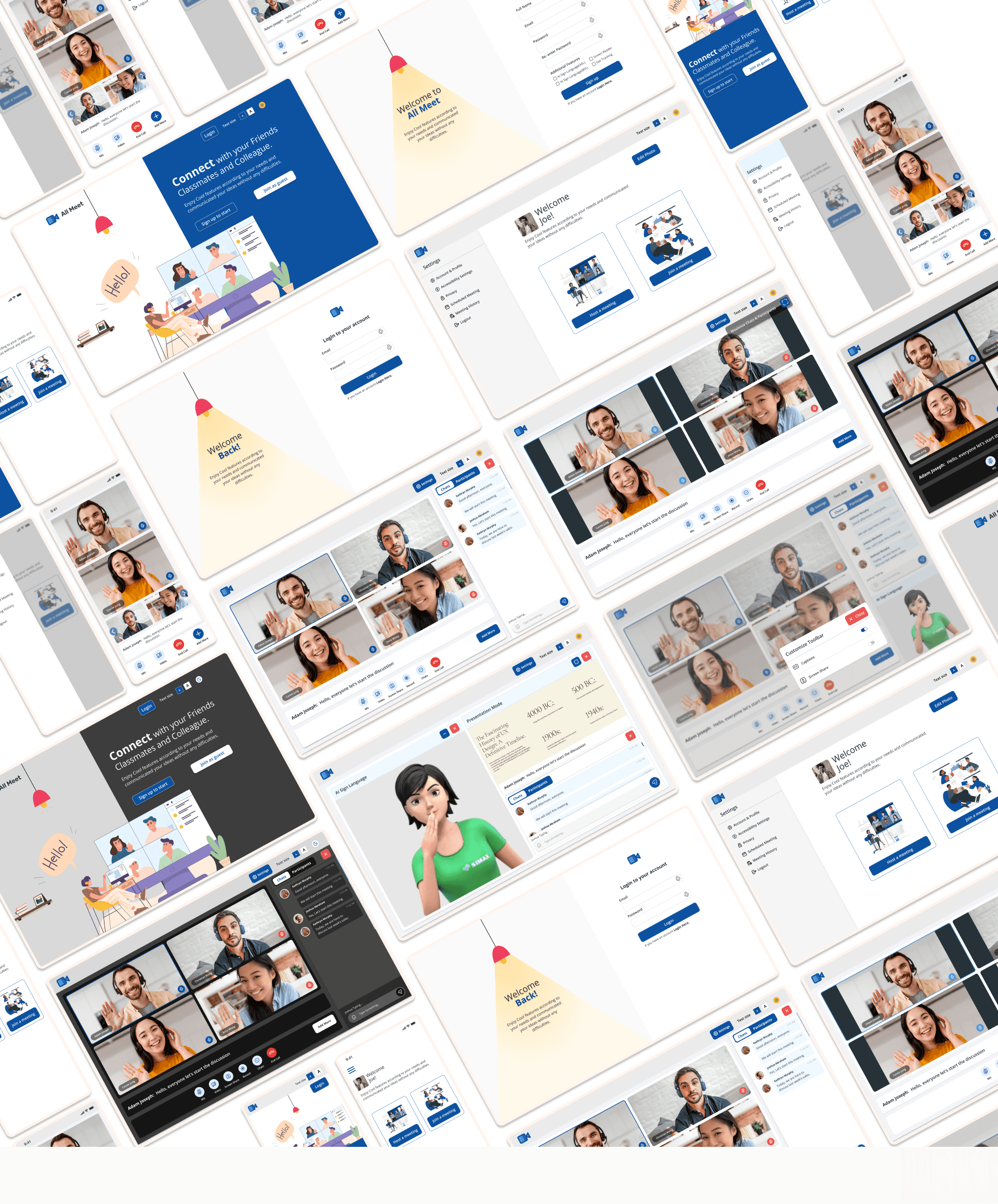
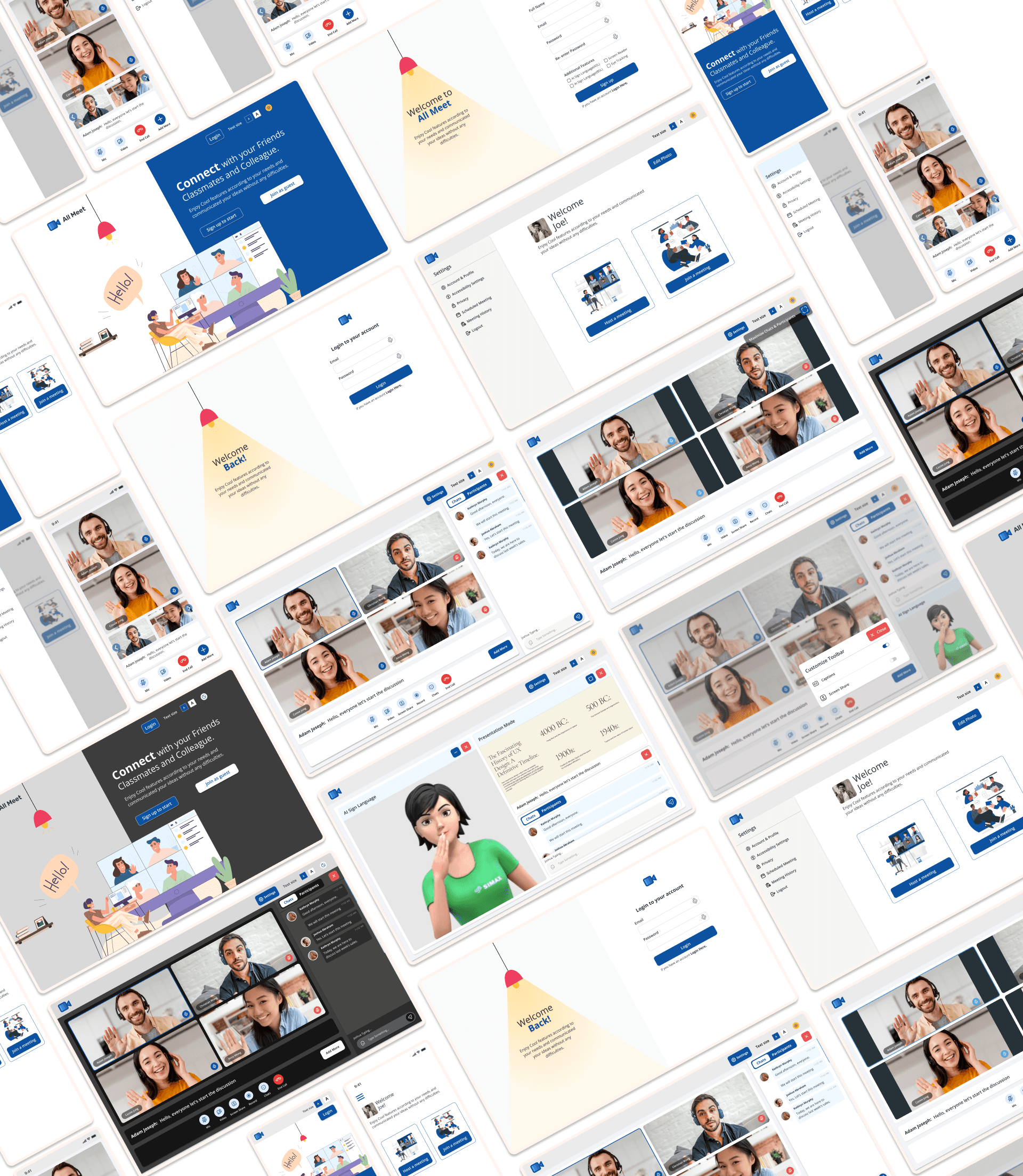
All Meet: Meeting Platform
My role and project details
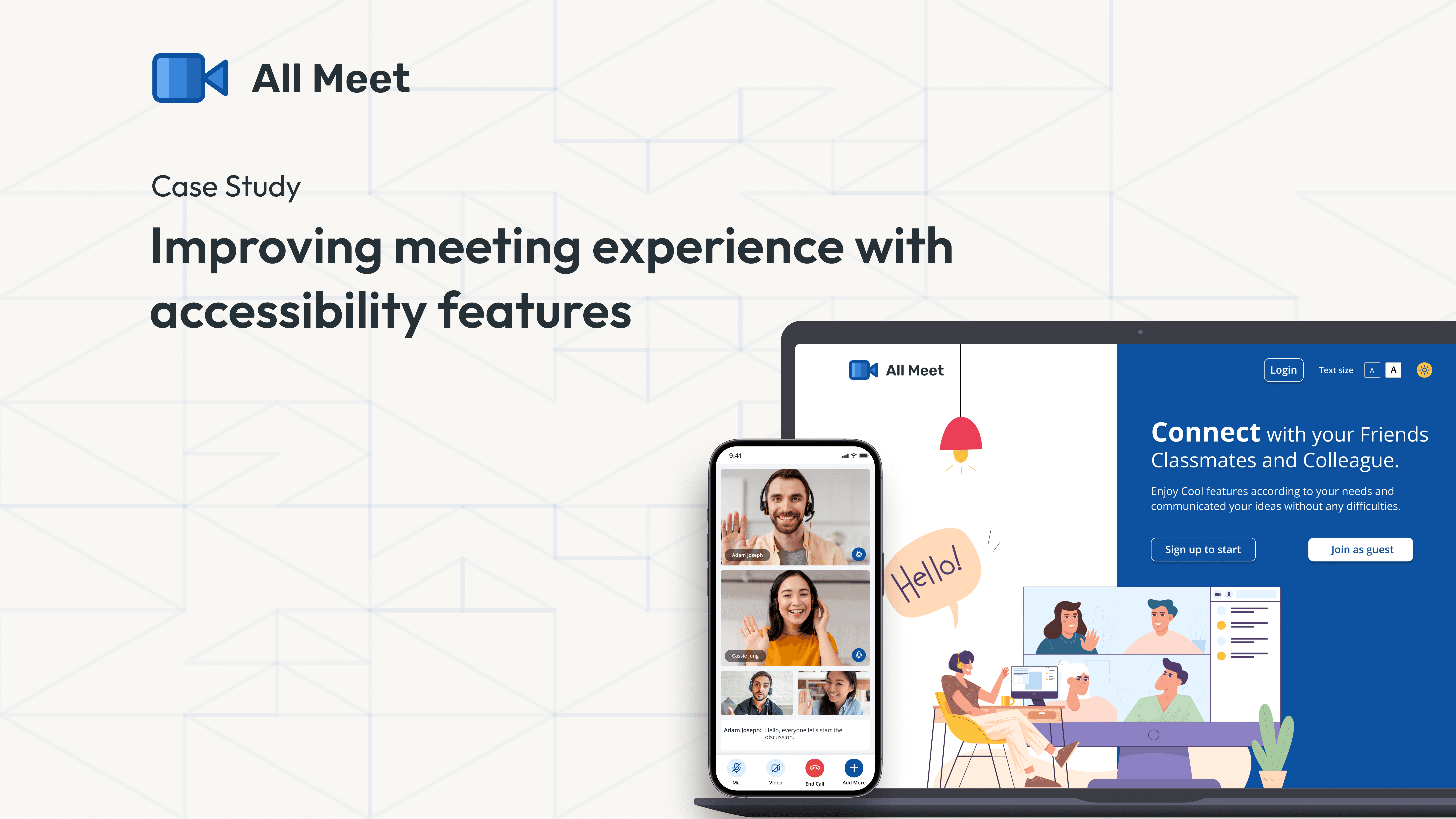
The All Meet platform was designed to address the communication challenges faced by students and professionals with disabilities, including hearing, visual, cognitive, and physical impairments. This project was part of my coursework in Accessibility and Assistive Technology, where I applied user-centered design principles and WCAG 2.1 guidelines to create a solution that enhances communication for students and professionals. The platform supports multiple devices, ensuring inclusivity for all users.
Design Process
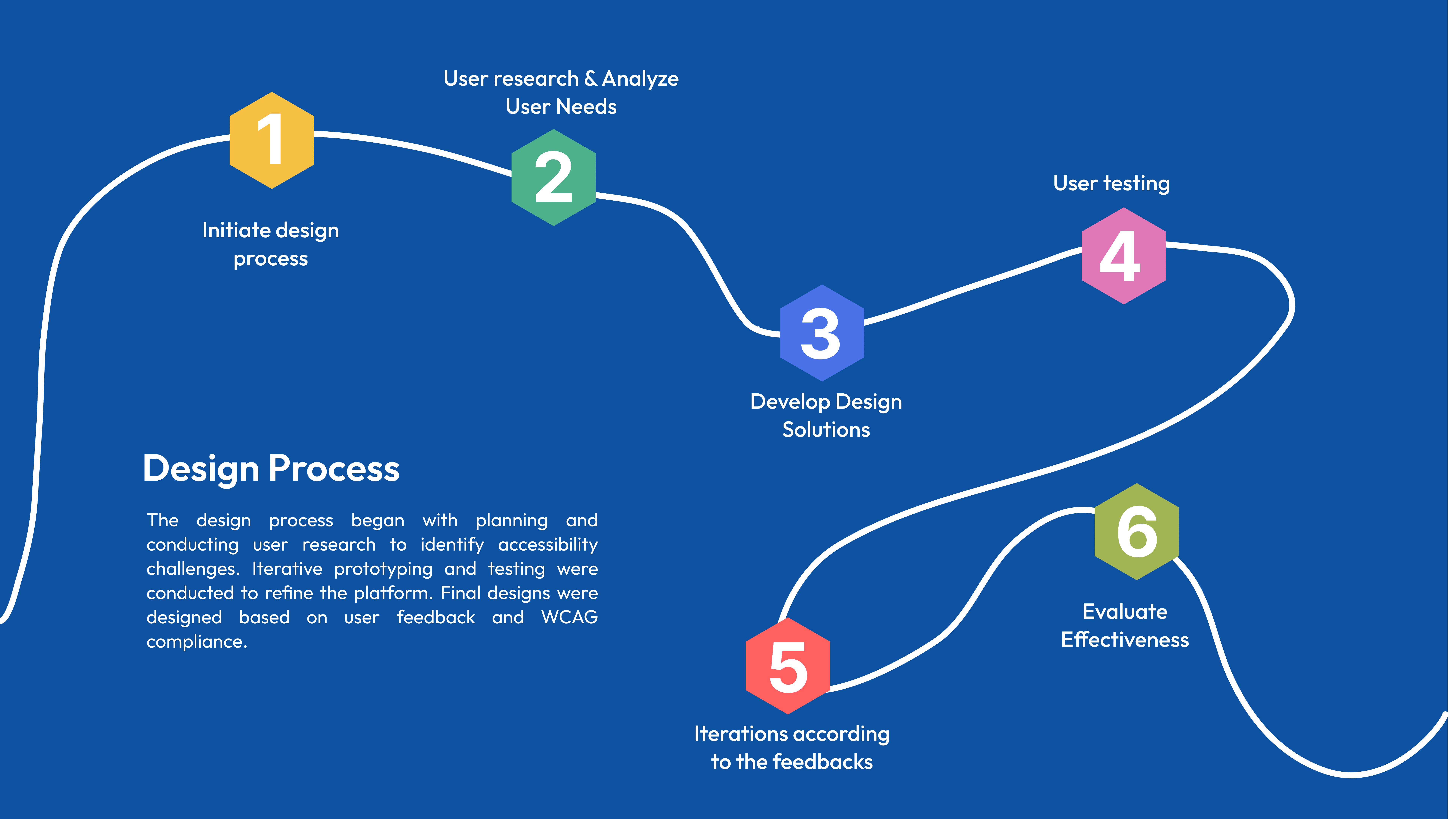
Design Problem
The Problem
The lack of inclusive communication platforms in the market creates a gap for businesses and organizations. Current solutions in the market fail to fully address the needs of users with disabilities, limiting their ability to participate effectively in virtual meetings. These challenges make it difficult for individuals with hearing, visual, cognitive, and physical impairments to participate in meetings effectively.
How do you know that there is a problem?
I conducted interviews and created personas to understand the specific challenges faced by users with disabilities. User research revealed issues like poor captioning, incompatible screen readers, and complex navigation. These barriers hindered effective communication for users with disabilities. Existing platforms lacked comprehensive accessibility features.
How I am going to fix the problem using user research or data analysis?
The problem was addressed through iterative design and user testing. Data analysis helped identify key pain points of the users with disabilities. Such as poor captioning, incompatible screen readers, and complex navigation in existing platforms. After testing of the platform I analyzed user feedback and task completion times during usability testing to identify areas for improvement. Based on the user feedback and testing iterations was done.
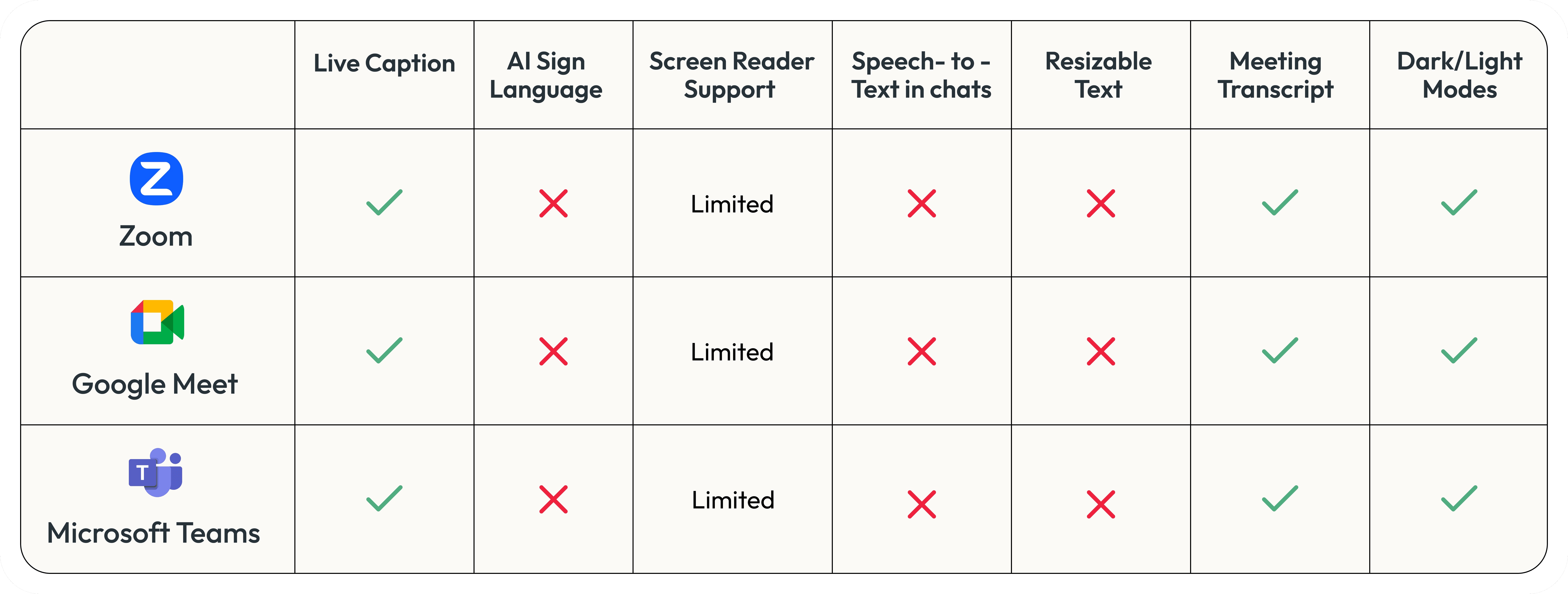
Feature Matrix
A feature matrix compared "All Meet" with existing platforms like Zoom, Google Meet, and Microsoft Teams, highlighting its unique accessibility features. The analysis showed gaps in current solutions, which "All Meet" aimed to fill. The users with disabilities faced challenges with poor screen reader compatibility, overlapping captions, and complex navigation. This differentiation emphasized the platform's focus on inclusivity.
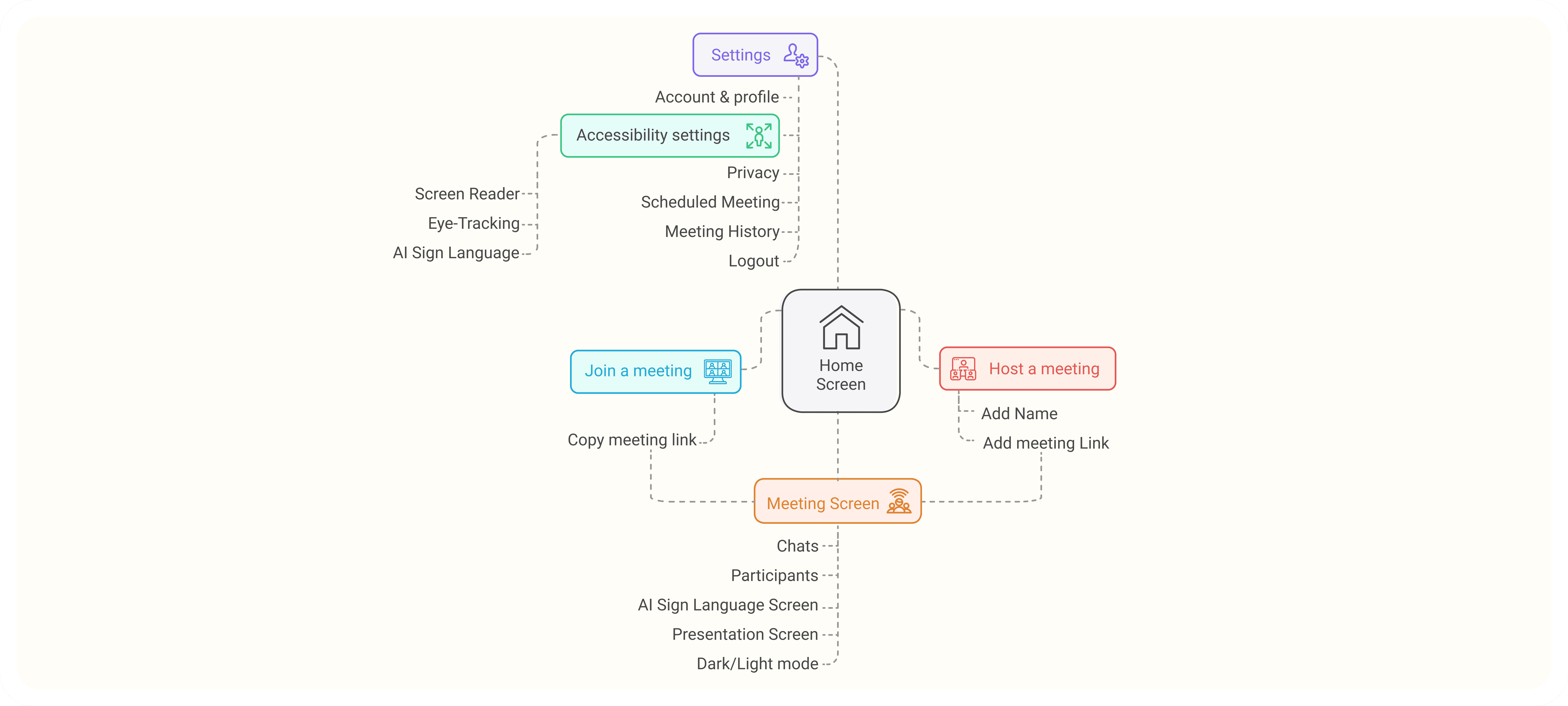
Information Architecture
Usability testing & Iteration
Testing
After conducting usability testing with participants (including users with disabilities), I identified key areas for improvement and iterated on the design to enhance accessibility and usability.
Improvements
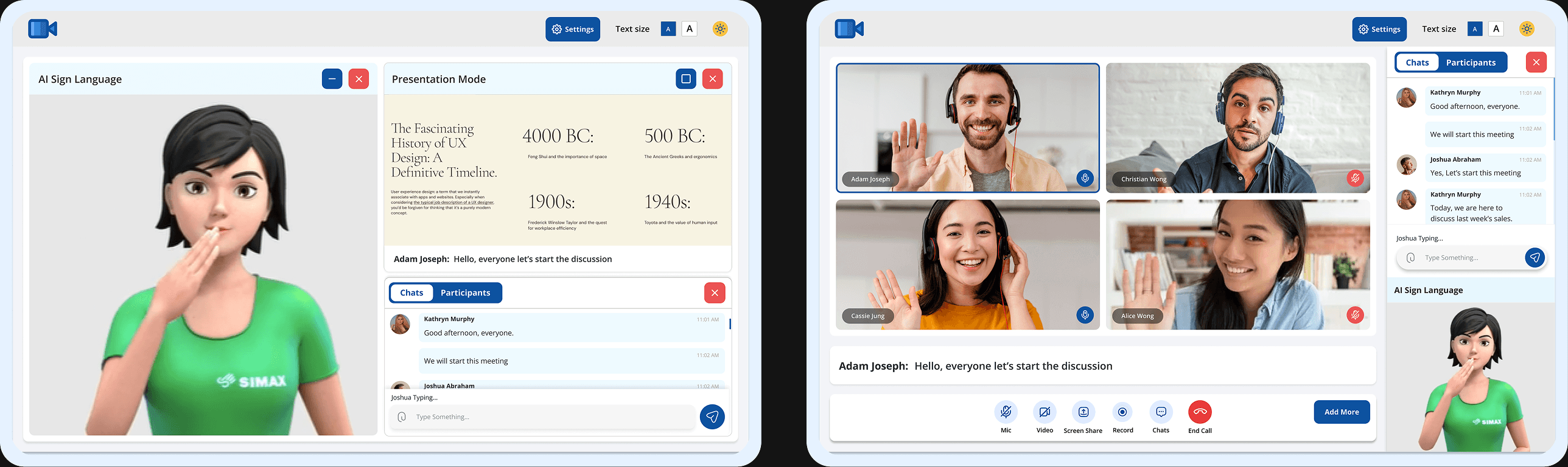
Based on user feedback, I made key improvements to All Meet, including a resizable AI sign language window, speech-to-text in chats, and enhanced live captions. These changes addressed issues like small sign language windows, overlapping captions, and typing difficulties, making the platform more inclusive and user-friendly for individuals with disabilities.
BEFORE AFTER